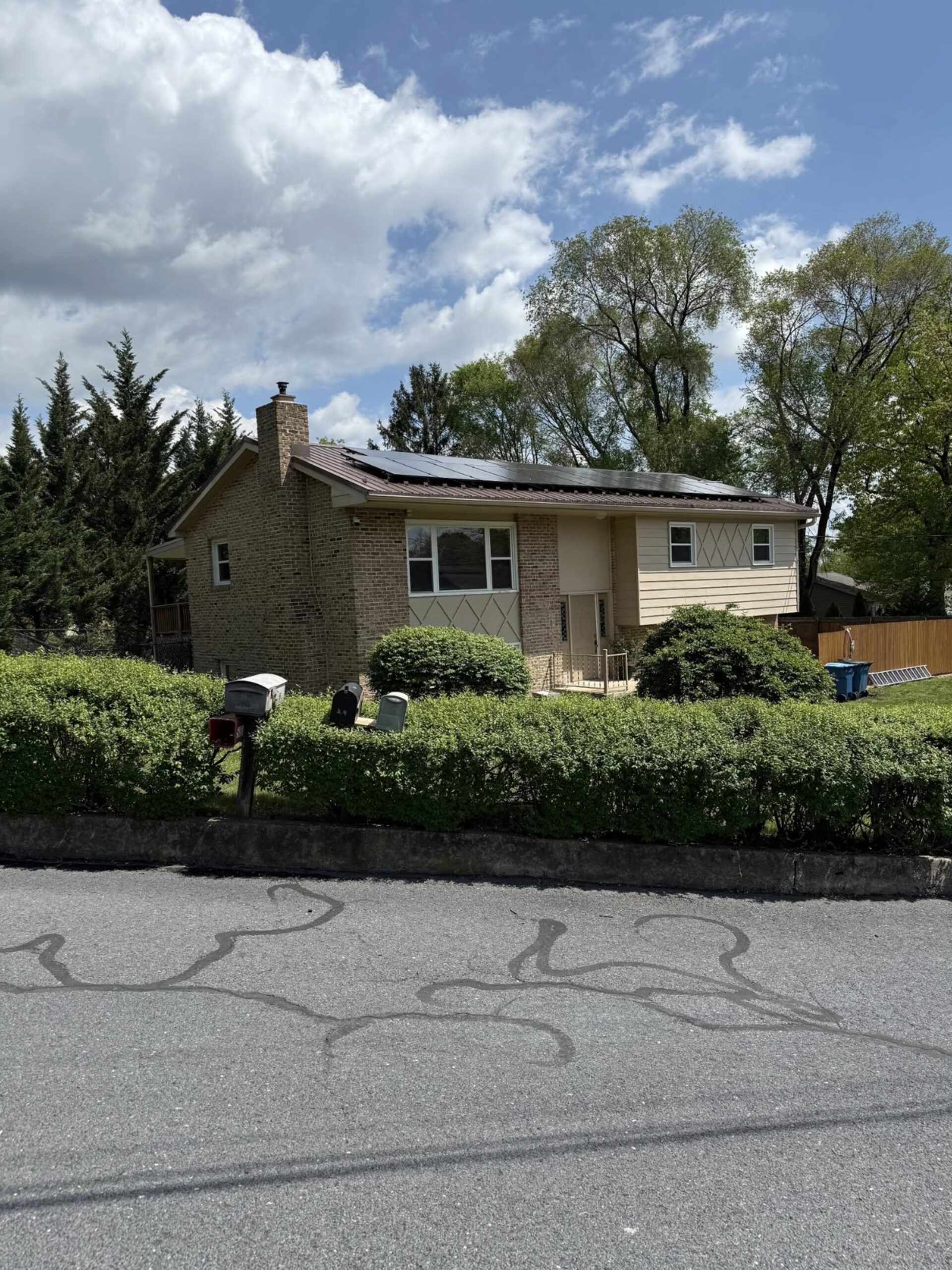
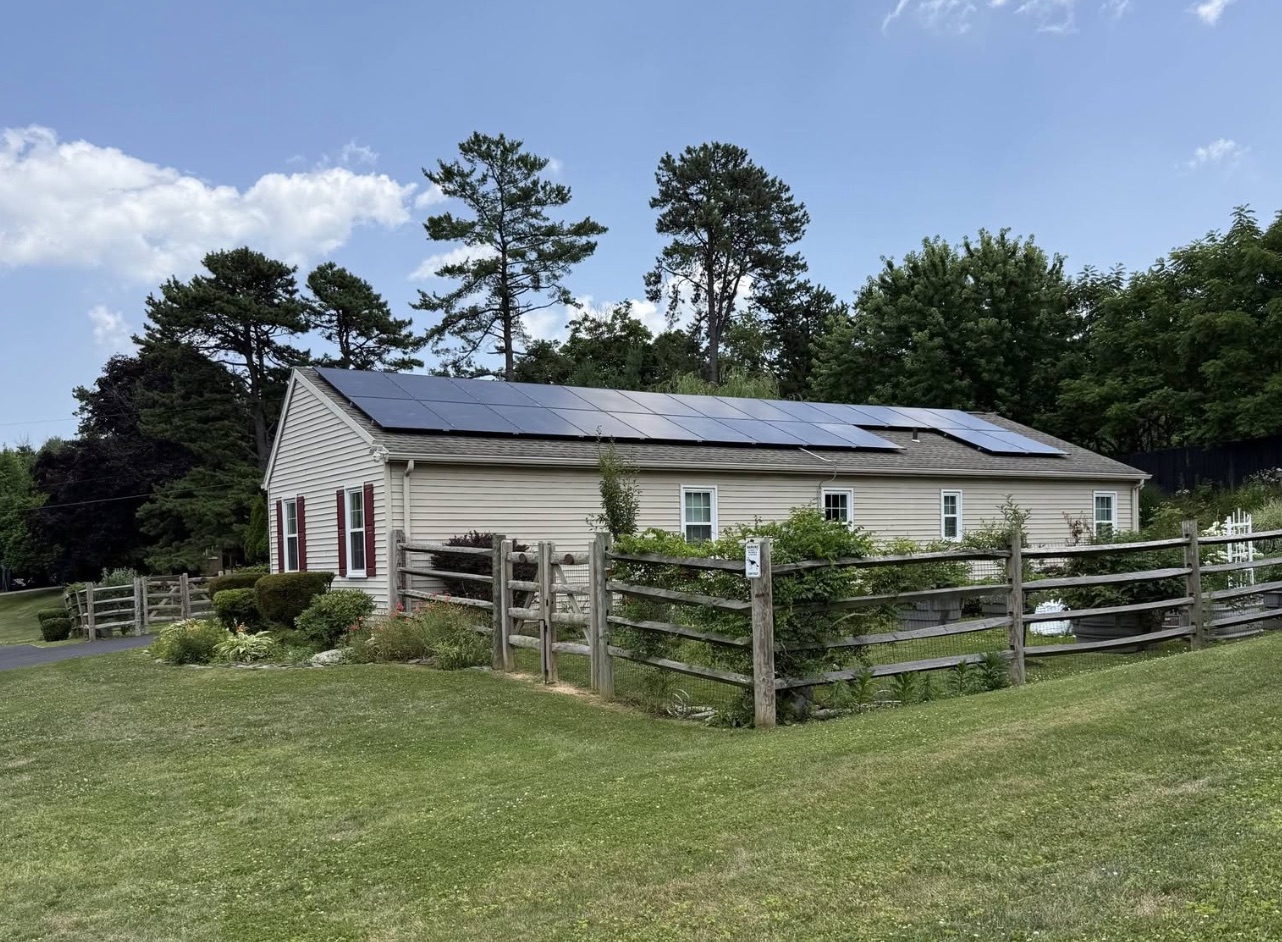
Net metering is the policy that makes rooftop solar financially sensible in Pennsylvania. Without it the economics of a home system would look very different, and most of the arrays you now see across Cumberland, Dauphin and York counties would not be there.
It is also, for something so important, badly explained almost everywhere. So let us do it properly.
The Basic Idea
Your electric meter measures the flow of power between your house and the grid. Before solar, that flow only went one direction: in.
With a grid-tied solar system, it goes both ways. When your panels produce more electricity than your home is consuming — a sunny afternoon while everyone is at work or school — the surplus flows back out to the grid, and your utility credits you for it.
Then at night, or on a heavily overcast day, or in the middle of a January cold snap, you draw from the grid the way you always have. Those credits offset what you would otherwise owe. At the end of the billing period you are charged on the net difference. Hence the name.
One day on your roof
- 7 a.m. — Coffee maker, lights, hot water. The panels are barely awake. You are pulling from the grid.
- 11 a.m. to 3 p.m. — Peak production, minimum occupancy. The house uses a fraction of what the roof is making. The surplus exports and earns credit.
- 6 p.m. — Everyone is home, the oven is on, production is falling off. You are importing again.
- Midnight — Zero production, steady draw. All import.
Over a day, exports and imports net out. Over a year, that netting is where the value lives.
Why Summer Pays for Winter
Pennsylvania has real seasons, and a solar array feels all of them. June production and December production are not close. If net metering settled up every single month, winter would be brutal.
It does not. Credits carry from month to month, which means a strong spring and summer build a cushion that gets drawn down through the short, grey part of the year. That rolling balance is what lets a well-sized system cover a large share of a full year's usage, rather than just the sunny half of it.
Worth asking your utility directly: how are your credits valued, and what happens to a leftover balance at the end of the annual period? The answer affects how a system should be sized, and it is a perfectly fair question to put to any installer before you sign anything.
Net metering rewards accuracy. It does not reward the biggest system somebody can sell you.
Across Pennsylvania's Utilities
Pennsylvania's net metering rules apply across the state's major electric distribution utilities, including PPL, Met-Ed, PECO, West Penn Power and Penelec. If you are in Central PA, you are almost certainly in one of them.
The framework is statewide, but the paperwork, the interconnection application and the timelines are handled utility by utility. That is normal, and it is one of the practical reasons to work with someone who files in your territory regularly. An application that sits in a queue because a form was filled out wrong is a real cost, measured in weeks.
Sizing Is the Whole Game
Here is the part that actually decides your outcome, and it is not the brand of panel on the box.
Net metering rewards a system matched to your real consumption. Build too small and you leave a large utility bill in place. Build too large and you have paid for production whose surplus may not be worth what you assumed it would be. Neither mistake is dramatic on day one. Both compound over twenty years.
Getting it right means measuring, not estimating:
- Twelve months of actual usage, not an average of two bills. The seasonal swing matters as much as the annual total.
- Roof orientation and pitch, per plane. Most roofs have more than one usable face and they do not perform identically.
- Shade, measured across the whole year. A tree that clears the roof in June can sit right on your array in October when the sun rides low. This is the single most common thing a satellite-photo “design” gets wrong.
- Structural condition, because the array has to live up there for decades.
- What is changing at your house. An EV, a heat pump or a finished basement all move your baseline. Sizing to last year's bill when next year looks different is a mistake.
That is why a real design process — site survey, structural assessment, year-round shade analysis — produces a different answer than a one-size-fits-all quote generated in ten minutes. The quick quote is not cheaper. It is just less accurate, and you find that out later.
What Net Metering Does Not Do
Three honest caveats, because they catch people off guard:
It does not zero out your bill. Utilities charge a fixed monthly customer charge for being connected to the grid, regardless of how much energy you use or export. Net metering offsets energy. It does not offset the cost of being a customer.
It does not make you independent of the grid. A net-metered system uses the grid as its storage. That is the entire mechanism. You are still very much connected, by design.
It does not keep your lights on in an outage. Grid-tied systems are required to shut down when the grid goes down. This protects the line workers who may be repairing the very lines your panels would otherwise be energizing. If outage protection matters to you, that is a battery conversation, and it is a separate one.
So What Would It Look Like on Your Roof?
The practical effect of net metering is that a properly sized system does not just reduce the power you buy — it earns value from the power you do not use. But “properly sized” is doing all the work in that sentence, and it depends on your roof, your trees, your usage and your utility.
Those are all knowable things. It takes a site visit and twelve months of your bills to put real numbers on them. And if the numbers do not work for your home, that is a legitimate answer too — one you deserve to hear before you sign, not after.